Executive Bonus

Reward the People Who Help Your Business Grow
Great employees can be difficult to find and even harder to replace. An Executive Bonus Plan allows a business to provide additional compensation to selected executives or key employees that can be used to help fund a personally owned life insurance policy.
It can give the business another way to reward, attract, and retain valuable people, while providing the executive with life insurance protection and potential additional benefits.
What Is an Executive Bonus Plan?
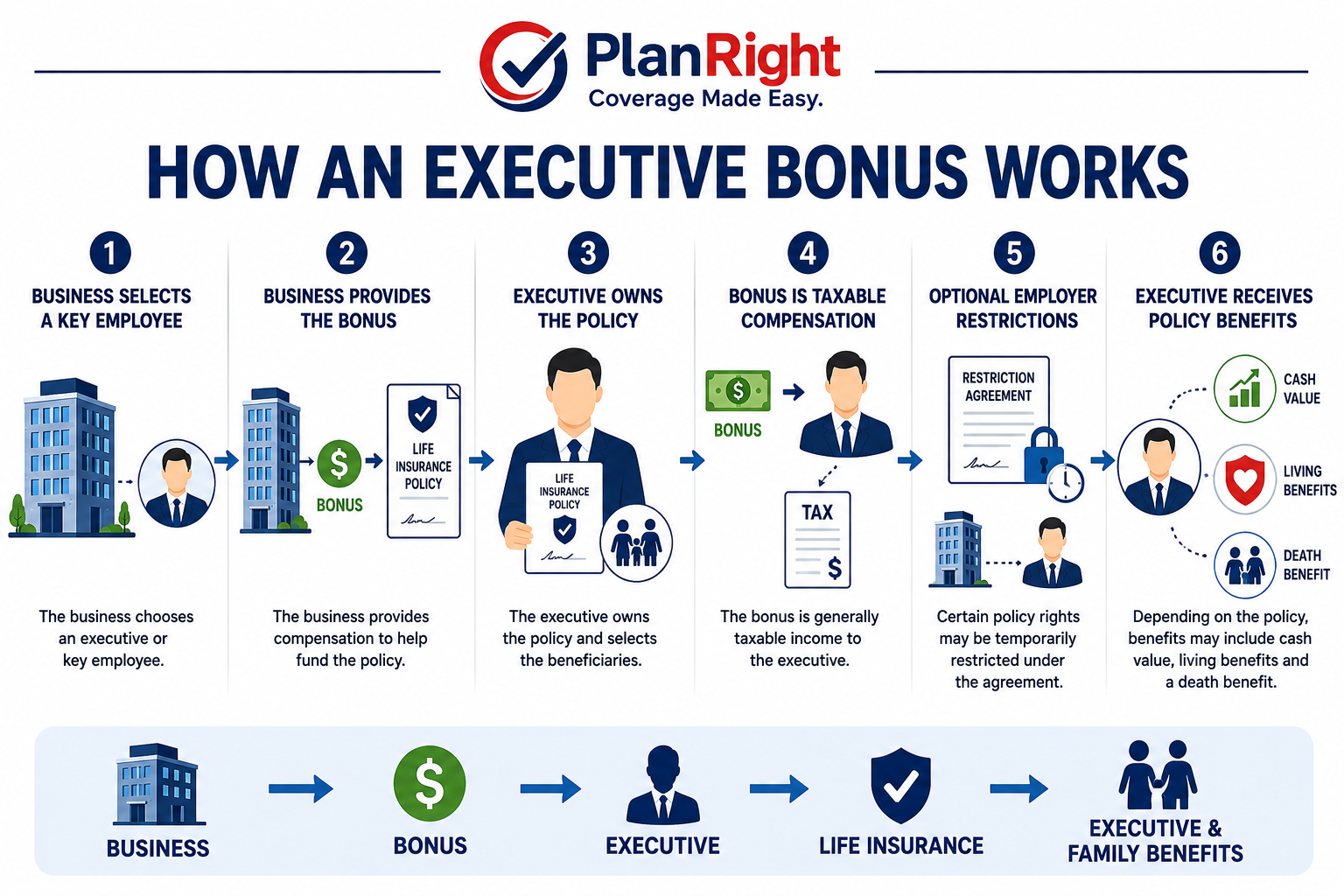
An Executive Bonus Plan, often referred to as a Section 162 Executive Bonus Plan, is an arrangement in which a business provides additional compensation to a selected employee to help pay premiums on a life insurance policy. The important difference from Key Person Life Insurance is:
The executive owns the life insurance policy not the business.
The executive generally chooses the beneficiaries and receives the rights and benefits associated with the policy.
How Does an Executive Bonus Work?
Single Bonus vs Double Bonus
Executive Bonus arrangements are commonly structured using either a Single Bonus or a Double Bonus approach.
Single Bonus
With a Single Bonus, the business provides a bonus intended to cover the life insurance premium. The bonus is generally considered taxable compensation to the executive, so the executive is responsible for the income taxes associated with receiving the bonus.
Simple Example
The annual life insurance premium is $10,000.
The business provides the executive with a $10,000 bonus to help pay the premium.
The executive receives $10,000 of additional taxable compensation and is responsible for the applicable taxes.
Double Bonus
With a Double Bonus, the business provides additional compensation intended to help cover both: The life insurance premium + the executive's estimated taxes associated with the bonus
Simple Example
Suppose the life insurance premium is $10,000.
Instead of only providing a $10,000 bonus, the business provides a larger, grossed-up bonus designed to help cover the premium and the estimated taxes created by the bonus.
The exact amount depends on the executive's tax circumstances.
What's the Difference?
Single Bonus:
Business helps pay the premium → Executive is responsible for the taxes.
Double Bonus:
Business helps pay the premium → Business provides additional compensation intended to help offset the executive's taxes.

How Do Taxes Work?
For the Business
Bonus compensation paid to an executive may generally be deductible as a business expense when applicable requirements are met, including reasonable-compensation requirements. The business should work with its tax professional to determine the appropriate tax treatment.
For the Executive
The bonus is generally treated as taxable compensation to the executive.
With a Single Bonus, the executive is responsible for the taxes associated with the bonus.
With a Double Bonus, the business provides additional compensation intended to help offset that tax obligation.
What About the Life Insurance?
Give Your Best People a Benefit They Can Value. An Executive Bonus can help you reward and retain key employees by helping fund a life insurance policy they personally own.
Benefits for Your Executive
Life Insurance Protection
Helps protect the people they love.Cash Value for the Future
Permanent life insurance can build cash value they may be able to access in the future.Living Benefits
Certain policies may provide access to benefits while living if they experience a qualifying serious illness.They Choose Their Beneficiaries
The executive decides who receives the death benefit.They Own the Policy
The executive owns the life insurance policy.
Optional Restrictions
The business may add certain restrictions to encourage the executive to stay with the company.
Example: The executive may need to remain with the company for 10 years before certain policy rights become fully available to them.
You Help Pay for It
The business provides the bonus that helps fund the policy.
Reward. Protect. Retain.
Give your key people a benefit that can provide value today and in the future.
Benefits for the Business
Reward Your Best People
Provide an additional benefit to executives or employees who are especially valuable to the company.
Help Retain Key Employees
A valuable benefit can give important employees another reason to stay and grow with the company.
Choose Who Participates
Unlike many qualified employee benefit plans, an Executive Bonus arrangement can generally be offered selectively to chosen employees.
Flexible Benefit Amounts
The business can structure different bonus amounts for different participating employees.
Potential Business Deduction
Qualifying bonus compensation may generally be deductible to the business, subject to reasonable-compensation and other applicable tax requirements.
Who Can Receive an Executive Bonus?
Executive Bonus arrangements can potentially be used for selected employees such as:
Executives
Managers
Key employees
Top salespeople
Highly compensated employees
Specialized professionals
Other employees the business wants to reward or retain
The person receiving the bonus must qualify for the life insurance policy based on the insurance company's underwriting requirements.
A Simple Executive Bonus Example
A Business Wants to Keep a Valuable Executive
A growing company has a manager who has become extremely important to the success of the business.
The company wants to reward the manager and provide an additional benefit beyond their regular salary.
The executive applies for a personally owned permanent life insurance policy.
The company provides an annual bonus to help fund the policy.
The Business Gets:
A way to reward and help retain an important employee.
The Executive Gets:
A personally owned life insurance policy that can provide protection for their beneficiaries and may accumulate cash value. The result is a benefit designed to create value for both the business and the executive.
What Types of Businesses Can Use Executive Bonus Plans?
Executive Bonus arrangements may be considered by many different types of businesses, including:
Small Businesses
Businesses that want to provide additional benefits to a few important employees.Corporations
Companies looking for another way to reward executives and key employees.Professional Practices
Medical, dental, legal, accounting, consulting, and other professional firms.Family-Owned Businesses
Businesses that want to provide additional benefits to selected employees or family members working in the company when appropriately structured.Sales Organizations
Companies that want to reward top producers or important sales leaders.Growing Businesses
Companies competing to attract and retain talented people as the business expands.The size or industry of the company isn't necessarily the most important question.
Do you have someone in your business you really want to keep?
If the answer is yes, an Executive Bonus Plan may be worth exploring.
Take Care of the People Who Help Your Business Succeed
Your best people are an important part of what you've built. An Executive Bonus Plan may provide a way to reward key employees, strengthen your benefits strategy, and help provide valuable life insurance protection for the people who contribute to your company's success.
Speak with a licensed professional to explore whether an Executive Bonus strategy may be appropriate for your business.
Executive Bonus arrangements involve tax, legal, and insurance considerations. Tax treatment depends on the specific arrangement and individual circumstances. PlanRight and its insurance professionals do not provide tax or legal advice. Consult qualified tax and legal professionals regarding your specific situation.