Key Person Life Insurance

Protect the People Your Business Depends On
Some people are difficult to replace. An owner, executive, top salesperson, or highly skilled employee may play a major role in your company's revenue, relationships, operations, or future growth.
Key Person Life Insurance can help protect the business financially if an insured key person passes away.
What Is Key Person Life Insurance?
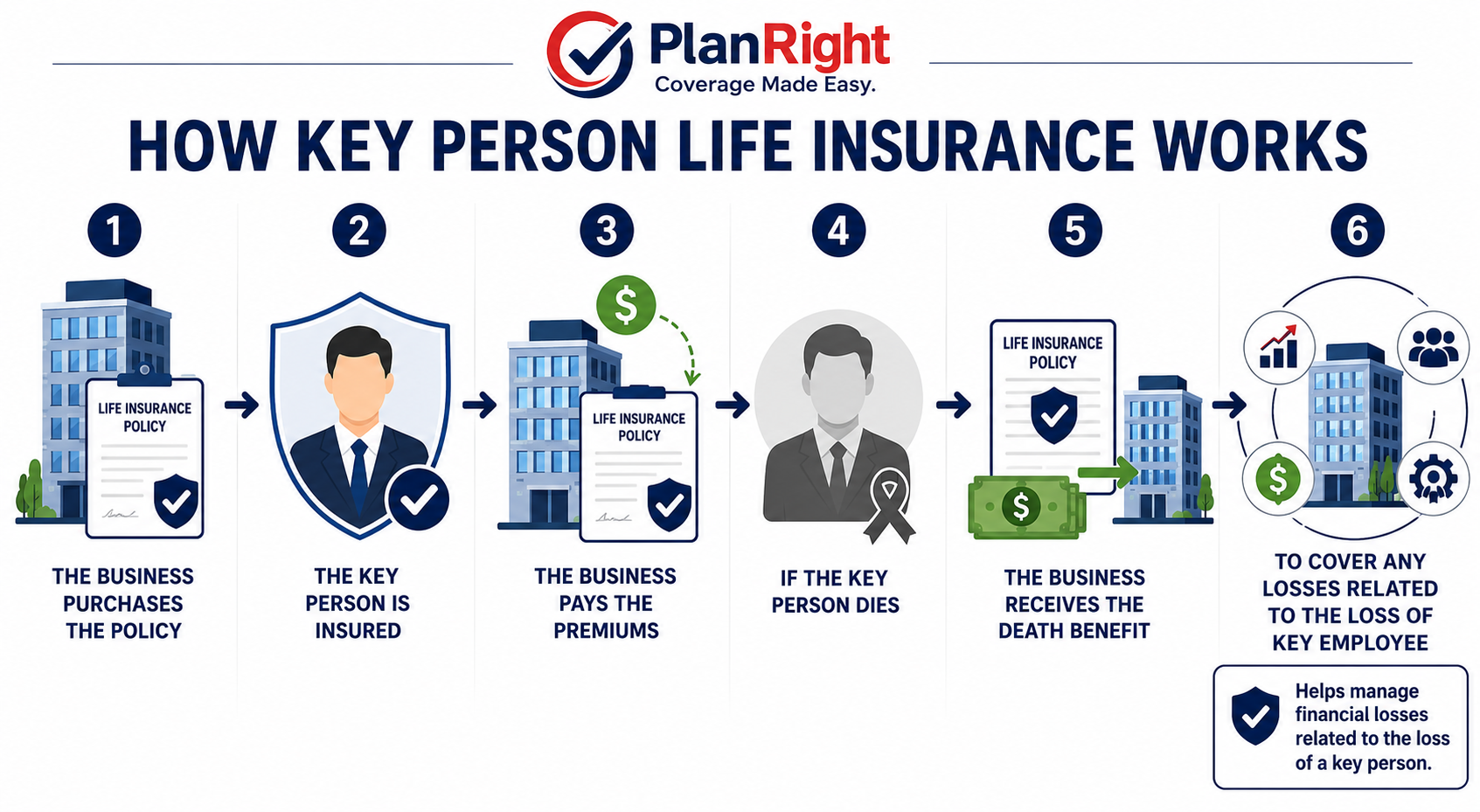
Key Person Life Insurance is life insurance purchased to help protect a business from the financial impact of losing someone important to the company's success.
Typically:
The business purchases the policy
The key person is insured
The business pays the premiums
The business receives the death benefit
The business can then use those funds to help manage the financial challenges created by the loss.
Who Can Be a Key Person?
A key person isn't necessarily just the owner.
It could be someone whose loss could significantly affect the business, such as:
Business Owner or Founder
Someone whose leadership, relationships or expertise is critical to the company.Executive or Manager
Someone responsible for important operations, teams or strategic decisions.Top Salesperson
Someone who generates a significant amount of the company's revenue.Specialized Employee
Someone with skills, knowledge, licenses or relationships that would be difficult or expensive to replace.
The simple question is:
“What would happen to the business financially if this person wasn't here tomorrow?”
How Can It Help the Business?
The death benefit can provide the business with financial resources during a difficult transition. Depending on the company's circumstances, those funds could help with:
Lost Revenue
Help offset some of the financial impact caused by losing someone important to the business.Finding a Replacement
Recruiting, hiring and training the right replacement can take time and money.Business Expenses
Help the company continue meeting payroll, rent and other financial obligations while it adjusts.Debt & Financial Obligations
Provide additional liquidity when the business may already be under financial pressure.Time to Make Decisions
Instead of being forced to make immediate financial decisions, the business may have additional resources to develop a transition plan.
A Simple Example
Imagine a business has a top salesperson responsible for a significant portion of its revenue.
If that salesperson unexpectedly passes away, the business doesn't just lose an employee. It could also lose sales, customer relationships and future revenue while spending money recruiting and training a replacement. If the company had Key Person Life Insurance on that employee, the business could receive the policy's death benefit. Those funds could help the company manage the transition, replace lost revenue and find the right person to fill the role.
That's the purpose of Key Person coverage:
Helping the business stay financially stronger when it loses someone it depends on.
How Much Coverage Does a Business Need?
There isn't one amount that's right for every business. When evaluating coverage, a business may consider:
Revenue the person helps generate
Cost to recruit and train a replacement
Salary and compensation
Time needed to replace the person
Business debts and obligations
Financial impact of losing the person
A licensed professional can help the business evaluate these factors and explore an appropriate amount of coverage.
Is Your Business Dependent on a Key Person?
Think about your company for a moment. Is there one person whose unexpected loss could significantly affect your revenue, operations or ability to continue growing? If the answer is yes, it may be worth exploring Key Person Life Insurance.
What Types of Businesses Can Use Key Person Life Insurance?
Small businesses — especially when the company depends heavily on the owner or founder.
Partnerships — when one partner plays a critical role in revenue or operations.
Corporations — to protect executives, officers, or other important employees.
Professional practices — such as medical, dental, legal, accounting, or consulting firms.
Sales-driven businesses — when a top producer is responsible for significant revenue or client relationships.
Family-owned businesses — when a family member is essential to running the company.
Startups & growing companies — when founders or specialized employees are critical to the company's future.
Protect the Business You've Worked Hard to Build
We can help you understand your options and determine whether Key Person Life Insurance may be appropriate for your business.